
 English
 中文简体
中文简体 русский
 Español
 Inquiry
Industry News
Home / News / Industry News / Are There Noticeable Differences Between Auto Darkening Welding Helmet Supplier
2026-06-05
In recent years, the market for Auto Darkening Welding Helmet Supplier has grown in both scale and variety. What once felt like a fairly uniform category now shows clear variation, especially when viewed through the lens of sourcing and supply. Buyers who move from one supplier to another often notice subtle but meaningful differences. These differences may not always appear in product descriptions. They tend to surface during communication, sampling, delivery, and long-term use.
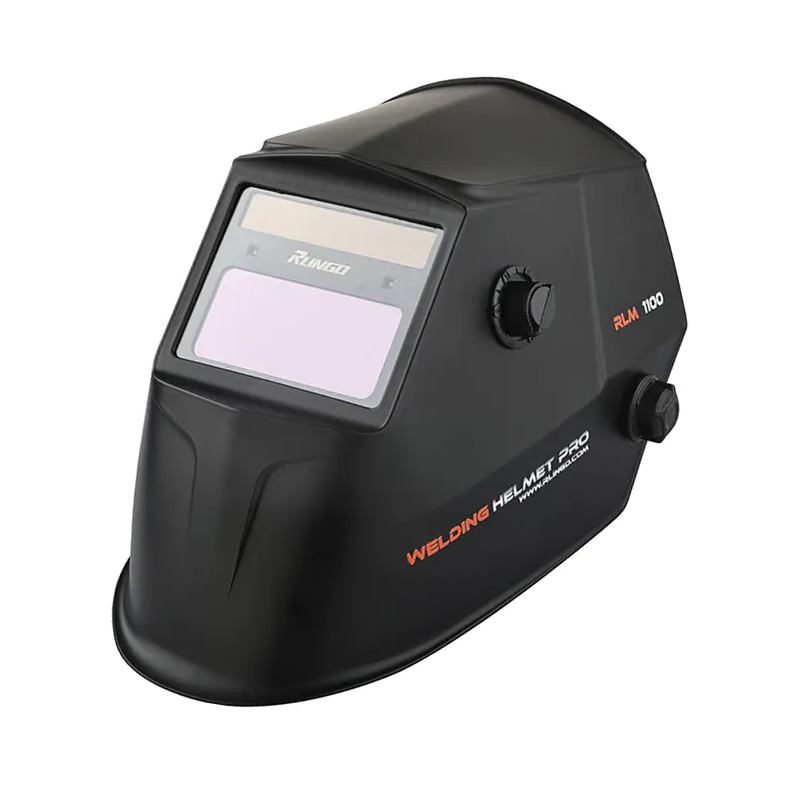
The question, then, is not whether differences exist, but how they show up in practice.
Consistency is one of the first things buyers notice over time. At a glance, helmets from different suppliers may look similar. The outer shell shape, viewing window, and basic structure often follow familiar patterns. Yet consistency becomes more visible after repeated orders.
Some suppliers maintain stable output across batches. The feel of the material stays the same. The assembly details remain aligned. Even small elements such as strap tension or surface finish show little variation.
Others may deliver products that shift slightly between shipments. The change may not be dramatic, but it becomes noticeable when products are placed side by side.
A simple comparison helps illustrate this:
| Aspect | More Consistent Suppliers | Less Consistent Suppliers |
|---|---|---|
| Appearance | Uniform across batches | Minor visual differences |
| Assembly feel | Stable and predictable | Slight variation in fit |
| Packaging condition | Standardized | Occasional inconsistency |
| Repeat orders | Similar outcomes each time | Some variation between orders |
These differences are often tied to internal processes rather than visible design choices.
Many buyers don't pay enough attention to communication when picking suppliers, yet it impacts every step of the partnership — from initial enquiries right through to final delivery.
Some suppliers get straight to the point. They reply promptly and lay out information clearly, so you can make decisions easily. Conversations stay coherent and consistent too.
Others tend to give scattered replies, sharing details bit by bit. You'll often need to follow up to get things clarified. This doesn't mean they aren't competent, but it definitely slows work down.
Tone also varies a lot. Some keep things formal in all messages, while others prefer a casual, chatty approach. Most buyers adjust to different styles, but steady, reliable communication always helps avoid misunderstandings.
When you work together long-term, these communication habits become part of your daily routine. Minor delays or vague answers add up over time, and can even throw your whole schedule off.
Customization is a common request in this category. Buyers may ask for changes in color, logo placement, or packaging style. The response to these requests varies.
Some suppliers treat customization as a structured process. They provide clear steps. Sample timelines are defined. Adjustments are discussed before production begins.
Others handle customization in a more flexible but less defined way. This can feel convenient at the start, but it may lead to misunderstandings later.
A closer look at customization approaches:
Structured approach
Flexible approach
Neither approach is inherently better. The difference lies in how well it matches the buyer's expectations.
Packaging is often treated as a secondary detail. Yet it plays a role in both protection and presentation.
Some suppliers use standardized packaging methods. Each unit is packed in a consistent way. Outer cartons follow a uniform structure. This reduces the chance of damage during transit.
Others may adjust packaging depending on order size or destination. While this can be practical, it may introduce variation.
Delivery timing also differs. Some suppliers build schedules around predictable cycles. Others operate with more flexibility, which can lead to variation in lead time.
These differences become more visible when orders increase in volume. A small shipment may not reveal much. Larger shipments tend to highlight gaps in planning or execution.
Quality control work isn't always obvious, but it makes a real difference. Buyers typically tell it works when orders arrive with no defects.
Some suppliers inspect goods at several key points: they verify individual parts ahead of assembly, and check finished products before packing. This multi-stage method keeps unexpected problems to a minimum.
Other suppliers stick purely to end-of-line inspections. It's a more straightforward workflow, but small defects may end up being missed.
A brief comparison:
| Quality Stage | Multi-Stage Checking Suppliers | Final-Only Checking Suppliers |
|---|---|---|
| Component review | Included | Limited or skipped |
| Assembly check | Regular | Occasional |
| Final inspection | Standard | Standard |
| Issue detection | Earlier in process | Later in process |
The difference often shows up in return rates or post-delivery feedback.
After-sales support is another area where differences become clear over time. It is not only about solving problems. It is also about how those problems are approached.
Some suppliers respond quickly to feedback. They ask for details. They propose solutions without delay. The process feels collaborative.
Others may take longer to respond. The discussion may involve more back-and-forth before a solution is reached.
Support can also vary in scope. Some suppliers provide guidance on usage and maintenance. Others focus only on product replacement.
These variations shape the long-term relationship between buyer and supplier.
A supplier's size really dictates their way of doing business. Bigger teams run on formal, set processes, and everyone knows their exact duties. This makes their service pretty consistent and dependable.
Smaller suppliers are usually far more agile. They can make quick calls and tweak things without hassle, plus you'll deal with them in a much more direct way.
It's not always easy to weigh up the pros and cons. Larger partners give you reliability you can count on, while smaller ones are great at adapting to new demands.
At the end of the day, buyers choose based on their own business needs, rather than simply picking one size over the other.
How a supplier handles the unexpected all comes down to their experience. This includes sudden changes to order quantities, design updates or adjusted delivery times.
Suppliers who've been in the business a long time can spot common issues early and plan ahead. That means they rarely have to rush to fix problems at the last minute.
Those with less experience tend to figure things out as they go. They're not unskilled by any means, but their problem-solving process will naturally move at a slower pace.
Experience also shapes how well they communicate. It helps them explain things clearly and come up with practical solutions faster.
Comparing suppliers requires more than reviewing product images or basic descriptions. A practical approach often includes several steps:
Requesting samples
Samples provide a direct sense of material, assembly, and finish.
Observing response time
Communication speed often reflects internal organization.
Reviewing packaging details
This reveals how products are prepared for shipment.
Testing repeat orders
Consistency becomes clearer over multiple transactions.
Discussing customization early
This helps reveal how flexible or structured the supplier is.
Each step adds a layer of understanding. Together, they form a more complete picture.
Price often reflects a combination of factors rather than a single element. Differences in consistency, communication, packaging, and support all play a role.
A lower price may come with more variation in one or more areas. A higher price may reflect a more structured process. The connection is not always direct, but patterns tend to emerge over time.
Buyers often balance cost with reliability. The decision depends on how each factor aligns with their needs.
At a glance, many auto darkening welding helmets appear similar. The shape, color, and general design often follow familiar patterns. This visual similarity can create the impression that suppliers offer nearly identical products.
A closer look tells a different story. Differences appear in how components are assembled, how materials feel during use, and how the product performs over time. These are not always visible in images or brief descriptions.
Even packaging can reveal hidden variation. The way a product is protected during transit often reflects the supplier's internal standards. Some shipments arrive in uniform condition. Others show small inconsistencies that hint at less controlled processes.
These details tend to matter more as order volume increases. A single unit may not reveal much. A larger batch often brings subtle differences into focus.
Transparency is not always discussed openly, yet it plays a role in how buyers evaluate suppliers. Some suppliers share information freely. They explain how orders are handled, how adjustments are made, and what to expect during production.
Others provide only the essentials. The process remains less visible. This can work for straightforward orders, but it may leave gaps when changes are needed.
Transparency also affects trust. When buyers understand how a supplier operates, they can plan more effectively. Uncertainty tends to decrease when processes are clear.
Over time, this clarity becomes part of the working relationship. It shapes how decisions are made and how challenges are handled.
Short-term transactions often focus on immediate needs. Long-term cooperation reveals deeper patterns.
Some suppliers maintain steady performance across multiple orders. Communication remains consistent. Product quality shows little variation. Delivery timelines follow a predictable rhythm.
Others may show variation over time. Changes in output, response speed, or packaging approach become more noticeable.
These patterns do not always appear at the beginning. They develop gradually, shaped by internal processes and external factors.
Buyers who track these patterns gain a clearer sense of which suppliers align with their expectations.
| Area | Common Variation Observed | Buyer Impact |
|---|---|---|
| Communication | Clear vs fragmented responses | Affects decision speed |
| Customization handling | Structured vs flexible approach | Influences accuracy of final product |
| Packaging | Standardized vs variable methods | Impacts product condition |
| Quality checks | Multi-stage vs final-only inspection | Affects consistency |
| After-sales support | Proactive vs reactive response | Shapes long-term cooperation |
This table does not capture every detail, but it highlights where differences often appear in real transactions.
In daily sourcing work, these variations rarely appear all at once. They emerge through interaction, repetition, and observation. What seems similar at the start gradually reveals layers of difference.
1. Do all auto darkening welding helmet suppliers offer similar product quality?
Not always. While products may look similar, differences can appear in consistency, assembly details, and overall finish across multiple orders.
2. How can I identify a reliable welding helmet supplier?
You can start by reviewing sample quality, observing communication clarity, and checking how the supplier handles questions and adjustments.
3. Why do some suppliers have more consistent delivery than others?
Delivery consistency often depends on internal organization, planning methods, and how orders are scheduled and managed.
4. Is customization handled the same way by all suppliers?
No. Some suppliers follow a structured process with clear steps, while others handle customization in a more flexible but less defined way.
5. Do packaging methods really make a difference?
Yes. Packaging affects product protection during shipping and can reflect how carefully orders are prepared.
6. How important is after-sales support when choosing a supplier?
It plays a role in long-term cooperation. Quick and clear responses can make problem-solving smoother if issues arise.
7. Are smaller suppliers less reliable than larger ones?
Not necessarily. Smaller suppliers may offer more flexibility, while larger ones often provide more structured processes.
8. What is the best way to compare different suppliers?
Comparing samples, testing repeat orders, and evaluating communication and delivery performance can provide a clearer picture.

Model: RLM 700
Model: RLM 1000
Model: RLM 1100
Model: RLM 800
Model: RLM 900
Model: RLM 1200

Building 7, Zeguo Electromechanical Pioneer Park, No.1 Park Road, Zeguo Town, Wenling,Taizhou City, Zhejiang Province, China
Tel: +86-0576-86442210
FAX: +86-0576-86442210
Phone: +86-15669702909
Copyright © Taizhou Ruiling Optoelectronics Technology Co., Ltd.
Auto Darkening Welding Helmet Factory