
 English
 中文简体
中文简体 русский
 Español
 Inquiry
Industry News
Home / News / Industry News / What Is the Difference Between Traditional and Auto Flash Welding Helmet
2026-05-08
Welding helmets are essential protective equipment in metal processing environments. They protect the eyes and face from bright light, heat, and sparks during welding work. Over time, helmet design has evolved from simple fixed-shade structures to more responsive light-adjusting systems. Among these, auto flash welding helmets and traditional welding helmets represent two different approaches to the same safety purpose. While both are designed for protection, their working behavior and user experience differ in several practical ways.
A traditional welding helmet uses a fixed protective lens that stays at a constant shading level. Before starting welding, the user typically flips the helmet down and begins work while looking through a darkened lens. This lens does not change its brightness level during operation, which means it remains the same whether the arc is active or not.
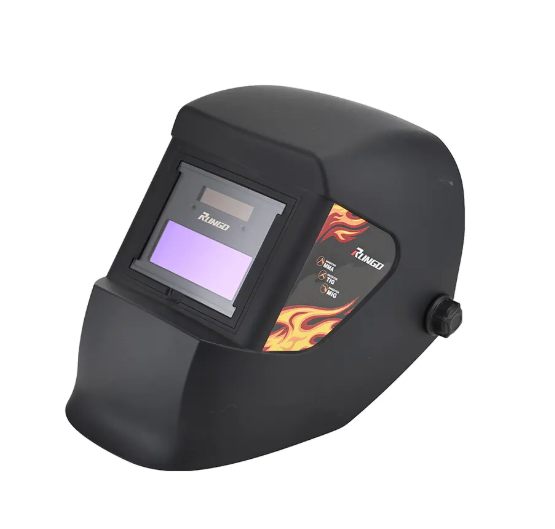
Because the shading is constant, the user often needs to lift the helmet frequently to see the work area before and after welding. This creates a repeated motion pattern during work. The protection is stable, but visibility outside welding moments is limited. In many working environments, this design is still used due to its simple structure and predictable behavior.
An auto welding helmet introduces a different approach to visibility control. Instead of using a fixed shading level, it adjusts the lens automatically depending on lighting conditions. When welding begins and bright light appears, the lens darkens quickly. When the light stops, the lens returns to a clearer state.
This automatic response allows users to keep the helmet in position for longer periods without lifting it frequently. The change in brightness happens within the helmet itself, based on environmental light detection. This creates a more continuous working flow, especially during repeated welding tasks where frequent position changes are common.
The most noticeable difference lies in how the user interacts with the helmet during work. A traditional welding helmet requires manual movement to lift or lower the visor depending on whether welding is active. This means the user must interrupt work flow to adjust visibility.
In contrast, an auto welding helmet responds automatically to changes in light. The user does not need to constantly lift the helmet to check the work area. This reduces interruption during tasks and allows the user to focus more on positioning and welding control rather than visibility adjustment.
| Aspect | Traditional Welding Helmet | Auto Flash Welding Helmet |
|---|---|---|
| Light adjustment | Fixed level | Automatic response |
| Visibility control | Manual | Continuous |
| Work interruption | Frequent lifting needed | Reduced adjustment |
| User interaction | High physical involvement | Lower physical adjustment |
| Operation flow | Step-based movement | Continuous workflow |
Welding involves intense light exposure that can affect visibility and comfort. In traditional helmets, the constant shading level means the user sees a darker environment even when welding is not active. This can make it harder to reposition materials or prepare the next step without lifting the helmet.
Auto flash helmets adjust to changing light conditions, which helps maintain a clearer view when welding is not active. This improves awareness of the working environment and reduces the need for repeated helmet movement. The difference in light response behavior directly affects how smoothly a task is performed.
Comfort during welding is influenced by how often the user needs to adjust the helmet and how clearly they can see the working area. Traditional helmets often require repeated lifting, which can create physical strain during long working sessions. Each adjustment interrupts the workflow and may slow down task continuity.
Auto flash helmets reduce the need for repeated lifting, allowing the user to maintain a more stable working position. The automatic lens adjustment also helps reduce visual strain by adapting to brightness changes. Over time, this can contribute to a more steady working rhythm, especially in environments where welding is performed continuously.
Visibility is one of the most important factors in welding work. Traditional helmets provide consistent protection but limit visibility when not actively welding. This means users often switch between protected viewing and open viewing by lifting the helmet.
Auto flash helmets maintain a more flexible visual environment. The lens adjusts to allow clearer viewing when welding is not active, reducing the need for manual adjustment. This helps users better observe materials, align positions, and prepare the next welding step without interruption.
Better visibility control can also reduce small positioning errors, especially in repetitive tasks where alignment consistency is important.
Traditional welding helmets generally have a simpler structure. The main component is a fixed lens inside a protective frame. Because there are fewer moving or responsive parts, maintenance is often straightforward and long-term durability is predictable under regular use conditions.
Auto flash helmets include additional components that respond to light changes. This makes the internal structure more complex. The added functionality supports automatic adjustment, but also introduces more elements that must remain in balance for consistent performance. Design differences reflect the trade-off between simplicity and adaptive behavior.
Several factors affect how both types of helmets perform during use. Environmental conditions such as lighting variation can influence how clearly the work area is seen. In traditional helmets, performance is mostly dependent on lens shading consistency. In auto flash helmets, responsiveness to light changes becomes an important factor.
User habits also matter. Frequent movement, long working sessions, and task complexity can influence how often adjustments are needed. The working environment, including brightness and workspace layout, also plays a role in how each helmet type feels in daily operation.
Different working styles often lead to different preferences between helmet types. In environments where welding is performed in short, controlled sessions, traditional helmets may be used due to their simple structure. In more continuous or repetitive workflows, auto flash helmets may be preferred because they reduce the need for manual adjustment.
The choice is often influenced by how much movement interruption is acceptable during work. Some users prioritize simplicity, while others prefer continuous visibility adjustment to support longer working periods without frequent pauses.
Both auto flash and traditional welding helmets are designed with safety as the main purpose. They protect the face and eyes from intense light and physical exposure during welding work. The difference lies in how they manage visibility and user interaction rather than the core protective function.
Traditional helmets offer consistent shading protection at all times of use. Auto flash helmets add dynamic adjustment to support changing light conditions. Both approaches contribute to maintaining safe working conditions in different ways, depending on how the equipment is used in practice.
Auto flash welding helmets and traditional welding helmets represent two different approaches to managing visibility and protection during welding tasks. One focuses on stable, fixed protection with manual adjustment, while the other introduces automatic response to changing light conditions. Each design supports specific working needs, shaped by user behavior, environment, and task requirements.

Model: RLM 700
Model: RLM 1000
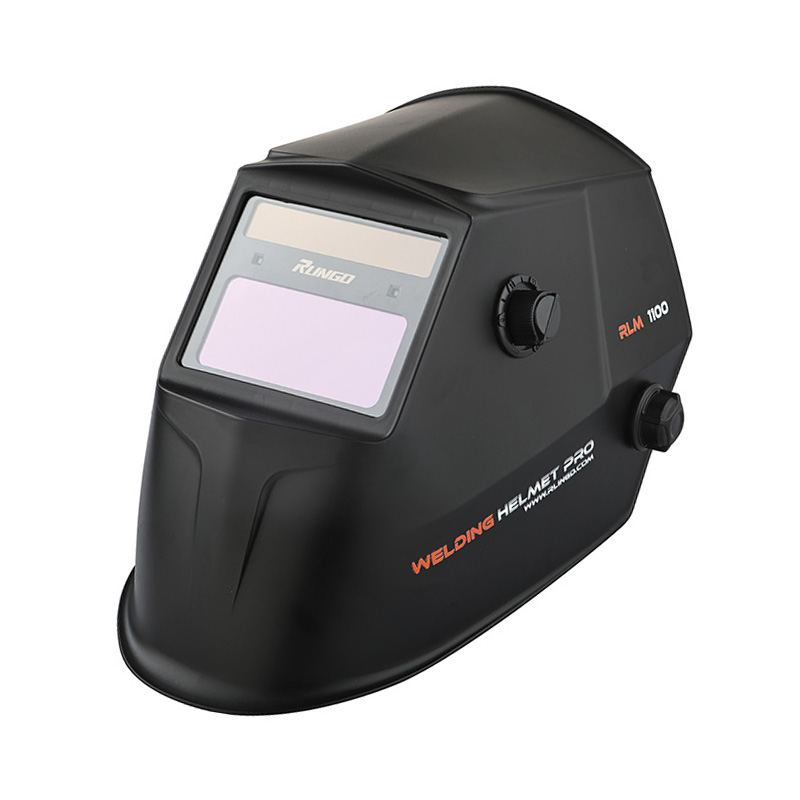
Model: RLM 1100
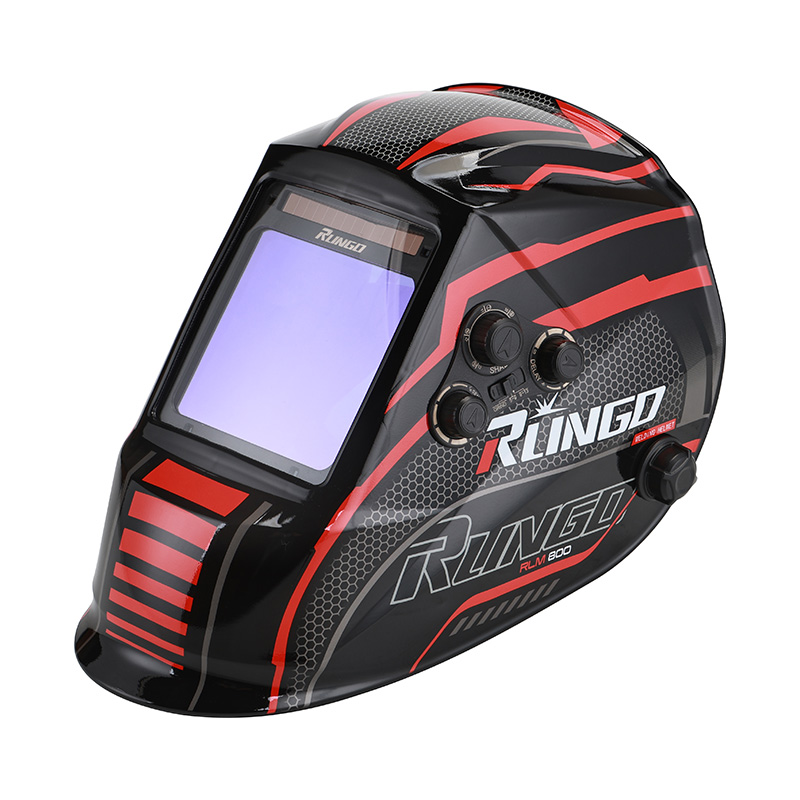
Model: RLM 800
Model: RLM 900
Model: RLM 1200

Building 7, Zeguo Electromechanical Pioneer Park, No.1 Park Road, Zeguo Town, Wenling,Taizhou City, Zhejiang Province, China
Tel: +86-0576-86442210
FAX: +86-0576-86442210
Phone: +86-15669702909
Copyright © Taizhou Ruiling Optoelectronics Technology Co., Ltd.
Auto Darkening Welding Helmet Factory