
 English
 中文简体
 русский
 Español

 Inquiry
Industry News
Home / News / Industry News / How Does a Full Face Auto Darkening Welding Helmet Improve Face Coverage in Industrial Welding?
2026-11-13
During welding, sparks don't always stay close to the joint. Spatter can hit the cheeks, chin, and lower face, particularly during overhead or awkward-position welding. At the same time, the operator is exposed to intense arc light. A welding helmet needs to deal with both problems without making it difficult to see the work.
A full-face auto-darkening model combines an extended outer shell with an electronic viewing filter. The larger shell covers more of the face, while the filter changes its shade when welding starts. How well this works depends on the actual helmet construction, filter quality, and fit.
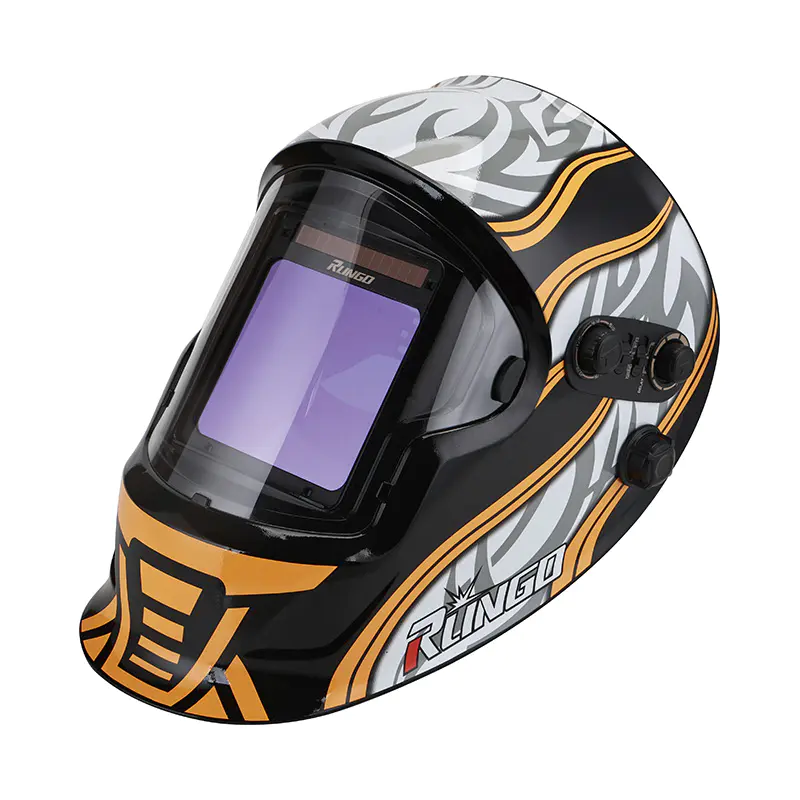
Extended Shells Cover More of the Face
The viewing window is only one part of a welding helmet. The shell surrounding it protects against sparks, spatter, and incidental contact with hot particles.
Full-face designs extend further around the cheeks and chin than some conventional models. This additional coverage can be particularly useful during MIG, stick, and flux-cored welding, where molten spatter is common.
When examining a helmet, check the lower edge, side coverage, and space around the jaw. Product descriptions such as full-face protection can be vague, so actual shell dimensions are more useful.
The helmet still needs to be used with suitable welding clothing, gloves, and respiratory protection. Covering more of the face doesn't mean every part of the body is protected.
How the Auto-Darkening Filter Responds to an Arc
Having to lift a helmet every time the welder positions an electrode is inconvenient. Auto-darkening filters avoid this by changing their light transmission when sensors detect the welding arc.
The system generally contains four main elements:
One important detail is that UV and IR protection in a compliant filter is designed to remain effective even when the viewing filter is in its light state. Buyers should check the actual product certification rather than relying on the term auto-darkening alone.
Filter Response Time and Viewing Quality
A filter that darkens too slowly can expose the operator to an uncomfortable flash when the arc starts. Optical clarity matters for a different reason: welders need to see the joint, electrode, and weld pool clearly throughout the job.
| Specification | What it tells you | Practical importance |
|---|---|---|
| Switching time | How quickly the filter changes from light to dark | Protection during arc initiation |
| Shade range | Available darkness settings | Different welding processes and current levels |
| Optical clarity | Quality of the viewed image | Easier positioning and weld inspection |
| Viewing area | Size of the visible working area | Visibility around the joint |
| Sensitivity | How readily sensors detect the arc | Helps avoid missed or false activation |
| Delay adjustment | How long the filter stays dark after welding | Reduces discomfort from residual brightness |
A large viewing window is useful, but it doesn't automatically mean better visibility. Optical quality and suitable shade settings matter just as much.
Shell Material and Heat Resistance
Welding helmets commonly use heat-resistant engineering plastics. The shell needs to withstand normal exposure to sparks, radiant heat, and accidental impacts without cracking or losing its shape.
Pay attention to the areas around the viewing window, headgear attachment points, and adjustment mechanisms. These sections experience repeated handling and can become weak if the material or construction is poor.
The surface should also be easy to clean. Welding dust and spatter collect around the front of the helmet, and damaged or heavily contaminated components should be inspected before further use.
For OEM products, material specifications and impact-test results should be checked against the intended safety requirements.
A Large Helmet Must Still Be Comfortable
More facial coverage can mean more weight. If the helmet is poorly balanced, the extra weight puts unnecessary strain on the neck during long welding shifts.
The headgear makes a considerable difference. Adjustable bands, several positioning options, replaceable sweatbands, and secure locking points help keep the helmet stable.
Another detail is how the helmet moves when raised and lowered. It should stay in the intended position rather than dropping unexpectedly or requiring constant adjustment.
For welders who use respirators, check the available clearance around the face and headgear. Compatibility should be tested with the actual respiratory equipment.
Different Welding Processes Need Different Filter Settings
A helmet used for TIG welding may need different filter characteristics from one used for heavy stick welding. Arc intensity, welding current, and spatter levels vary between processes.
| Welding process | Working conditions | Relevant helmet features |
|---|---|---|
| MIG welding | Continuous arc and frequent spatter | Suitable shade and extended face coverage |
| TIG welding | Precise arc control and detailed work | Clear optics and sensitive arc detection |
| Stick welding | Sparks and molten metal spatter | Durable shell and reliable filter |
| Flux-cored welding | Intense arc and substantial spatter | Secure coverage and suitable shade settings |
The shade must be selected according to the welding current, process, and applicable safety guidance. Using the darkest available setting for every job isn't necessarily appropriate.
Checking Safety Standards and Test Records
For industrial purchasing, certification needs to match the actual helmet and filter combination.
Depending on the destination market, relevant standards may include ANSI/ISEA Z87.1 in the United States, EN 175 for welding eye and face protection, and EN 379 for automatic welding filters in European markets.
Check the documentation for:
A certificate covering the filter alone doesn't necessarily establish compliance of the complete helmet. The model number and supplied configuration should match the documentation.
Choosing a Full Face Auto Darkening Welding Helmet
A wider shell is useful when welding spatter reaches areas that a conventional helmet may leave exposed. But coverage is only one part of the product. The filter must respond reliably, the viewing image needs to remain clear, and the headgear must support the additional weight.
When sourcing a Full Face Auto Darkening Welding Helmet, examine the actual coverage dimensions, filter specifications, shell material, and certification records. For bulk or OEM orders, sample testing under realistic welding conditions is particularly important.

Model: RLM 700
Model: RLM 1000
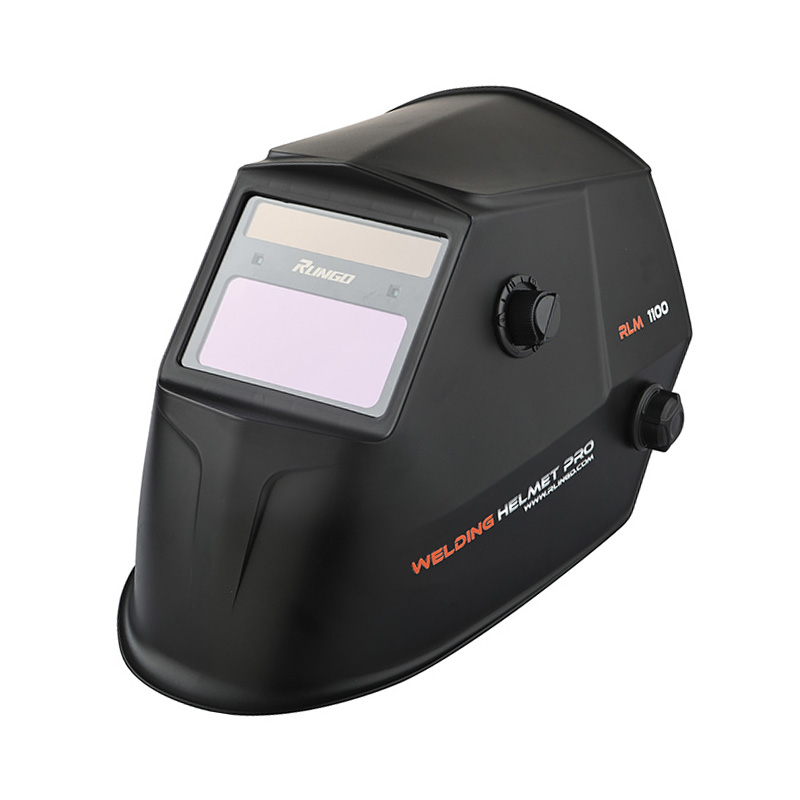
Model: RLM 1100
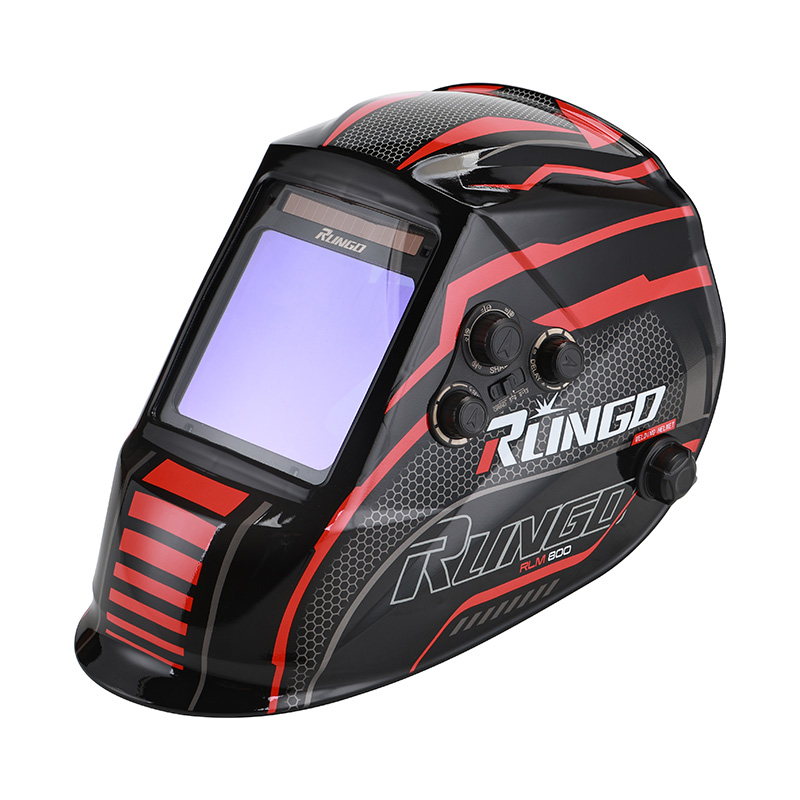
Model: RLM 800
Model: RLM 900
Model: RLM 1200

Building 7, Zeguo Electromechanical Pioneer Park, No.1 Park Road, Zeguo Town, Wenling,Taizhou City, Zhejiang Province, China
Tel: +86-0576-86442210
FAX: +86-0576-86442210
Phone: +86-15669702909
Copyright © Taizhou Ruiling Optoelectronics Technology Co., Ltd.
Auto Darkening Welding Helmet Factory